

Buying off-plan means buying a property before it is completed, often before or during construction.
Staged payments protect buyers because the full purchase price is not paid up front.
Payments can be tied to permits, construction stages, contract milestones, or handover.
That reduces exposure if the project is delayed, changed, or not completed as expected.
Crucial tests focus on personal use, primary and permanent residence status, statutory size limits, value limits, and long-term use conditions, so how can staged payments help buyers manage both construction risk and VAT exposure in 2026?
How Staged Payments Can Help by Protecting Buyers
Staged payments give buyers more control during an off-plan purchase.
Instead of releasing the full amount at the start, the buyer pays in phases as the project moves forward.
1. They reduce upfront risk
Paying the full amount before completion exposes buyers to construction delays, permit issues, delivery problems, specification changes, and VAT-position risk.
Staged payments reduce the amount at risk at any one time.
That matters in Cyprus because the final cost can change depending on whether the buyer qualifies for 5% VAT or must pay 19% VAT.
2. They create progress-based accountability
Payment triggers should be clearly defined in the sale agreement. Strong triggers can include:
- planning application submitted
- planning permit issued
- building permit issued
- foundations completed
- structural frame completed
- practical completion
- final inspection or handover
Planning permit dates, building permit dates, buildable area, and agreed purchase price can also affect VAT treatment and transitional eligibility.
3. They give buyers time to verify key details
Before a major payment, buyers can re-check title, land ownership, planning status, building permit status, VAT eligibility, contract registration, and delivery timing.
Buildable area is especially important.
VAT eligibility is based on buildable area, not only on brochure-style covered area. Buyers should compare the planning permit, architectural plans, and contract.
4. They protect cash flow
Staged payments help buyers plan funds in phases.
A buyer may also need to budget for VAT, furniture, pool upgrades, transfer costs, legal fees, stamp duty, utilities, and handover costs.
VAT can make a major difference. On a €300,000 new property charged at 19% VAT, VAT would be €57,000.
A 5% VAT rate can create major savings, but only if all conditions are met.
5. They support better negotiation
Buyers can negotiate smaller reservation payments, payments only after documents are issued, retention until defects are fixed, delay remedies, and written confirmation of what each payment stage covers.
Contracts should also explain what happens if VAT treatment changes, if a 5% VAT application is rejected, or if the project no longer fits the buyer’s VAT assumptions.
10/40/50 Payment Terms as an Example
A 10/40/50 payment structure can show how staged payments work in practice, but it should be treated as one developer’s structure, not a Cyprus market rule.
Elythera Homes’ steel frame house for sale in Lasa, Paphos listing describes a modern 163 m² house on a 1,647 m² private plot, with 3 bedrooms, 2.5 bathrooms, Energy Efficiency A, a covered garage, optional 3×7 m pool, optional furniture package, and a listed price of €330,000 plus VAT. Completion is stated as Q2 2027.
Listing details also state that customization may be possible before plans are submitted, including layout adjustments, finishes, pool requirements, furniture options, and other project details.
A 10/40/50 structure can be explained simply:
| Payment stage | Meaning | Buyer-protection value |
| 10% initial payment | Shows buyer commitment without paying most of the price upfront | Limits early exposure |
| 40% middle-stage payment | Can be linked to planning, permits, or construction milestones | Ties payment to visible progress |
| 50% final payment | Keeps the largest payment until later, ideally close to completion or handover | Preserves buyer leverage until the final stage |
Buyer protection comes through timing. Developer funding is released progressively, while the buyer keeps leveraging until later stages.
VAT timing should also be clear. For new properties, VAT can become payable at each payment stage under the sale contract, or at delivery, whichever comes first.
The 2026 Context – Why Buyers Must Budget Carefully
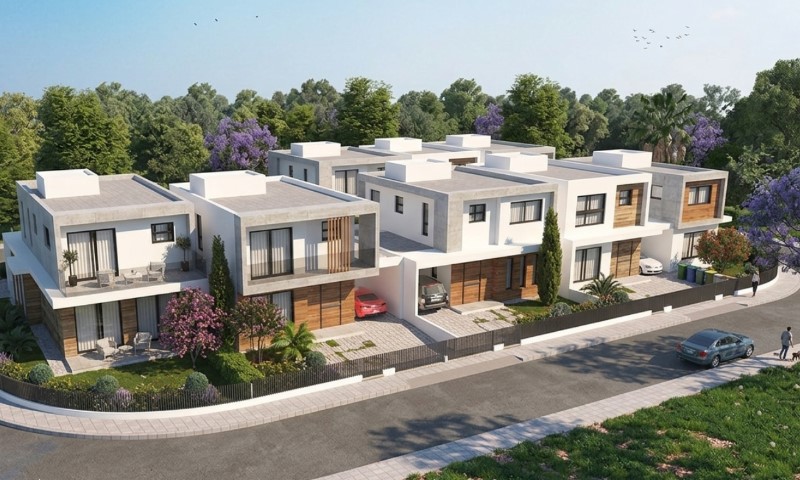
VAT can change the real price of an off-plan home in Cyprus. Buyers should check the VAT position before signing and before major staged payments.
Standard VAT rate
Cyprus applies a standard VAT rate of 19%. It generally applies to the first sale of newly built property, usually sold by a developer.
A new property bought for investment, rental income, or holiday-home use will generally be subject to 19% VAT because it is not being bought as the buyer’s primary and permanent residence.
Second-hand residential property is generally VAT-exempt once it qualifies as used property, but that is different than buying a new off-plan home.
Reduced 5% VAT
Reduced 5% VAT may apply to individuals buying or constructing a new property that will be used as their primary and permanent residence in Cyprus.
Current post-2023 rules include:
- 5% VAT applies to the first 130 m² of buildable residential area.
- Reduced-rate treatment is capped at the first €350,000 of transaction value.
- Total buildable area must not exceed 190 m².
- Total transaction value must not exceed €475,000.
- If the property exceeds 190 m² or €475,000, 19% VAT applies to the whole transaction.
For properties between 131 m² and 190 m², and within the €475,000 cap, 5% applies only to the first 130 m². Remaining square meters are charged at 19%.
Key conditions also include personal residential use, new-building status, no company ownership, and no holiday-home, rental, or investment use.
Reduced 5% VAT is open to EU and non-EU individuals, but the home must be used as the buyer’s main residence in Cyprus.
It must also be used as a permanent residence for 10 years.
If sold or rented during that period, the buyer must notify the Tax Commissioner within 30 days and repay the VAT difference proportionally for unused years.
Why VAT matters in payment planning
A staged payment plan should state if each installment is VAT-inclusive or plus VAT, if 5% is applied only after approval, and what happens if the buyer does not qualify.
Buyers may need ID or a passport, planning or building permits, architectural plans confirming buildable area, a stamped contract, proof of payment, and other documents for the reduced VAT application.
A declaration for reduced VAT is submitted digitally through Tax For All after the contract is signed and stamped, and after an initial payment is made.
The buyer should not occupy or use the property before submitting the declaration.
Transitional VAT Relief Until December 31, 2026

Some Cyprus projects may still fall under transitional VAT provisions in 2026. That makes permit timing a major detail.
Cyprus extended certain transitional provisions tied to the previous VAT rules until December 31, 2026 in qualifying cases.
Parliament approved the extension on April 17, 2026, and it was published in the Official Gazette on April 24, 2026.
Amendments published on June 16, 2023, introduced stricter criteria for reduced 5% VAT on primary residences.
Transitional provisions originally protected projects where a planning permit had already been issued or a planning permit application had been submitted by October 31, 2023.
Under the previous regime, qualifying projects could benefit by applying 5% VAT to the first 200 m², with 19% VAT only on the area above 200 m², and without the current total floor-area and value limits.
Extension to December 31, 2026 applies where the planning permit had been issued by October 31, 2023, or the application had been submitted by that date, and the building permit was issued after January 1, 2025, or has not yet been issued by December 31, 2026.
If the planning permit application was submitted by October 31, 2023 and the building permit was issued by December 31, 2024, transitional provisions apply only until June 15, 2026.
Starting January 1, 2027, taxpayers are expected to fall only under the newer 2023 VAT regime. Old 200 m² treatment will no longer apply.
Contract Clauses That Strengthen Buyer Protection
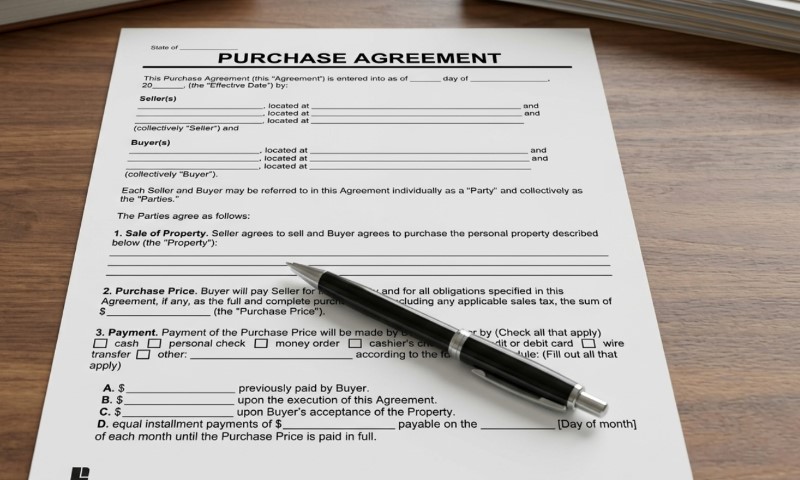
Strong clauses turn staged payments into real protection. Payment timing, permits, VAT treatment, specifications, delay remedies, and handover obligations should be written clearly.
Milestone-based payment clauses
Payments should be tied to objective events. For example: “40% payable only after completion of structural frame and written certification by the supervising engineer.”
Contracts should also clarify VAT payable on each installment because VAT may arise at each payment stage or at delivery, whichever comes first.
Permit and approval conditions
Contracts should state what happens if permits are delayed, changed, or refused.
The buyer should request copies of the planning permit application, planning permit, building permit, architectural plans confirming the buildable area, and documents needed for the reduced VAT application.
Completion date and delay remedies
The contract should include the expected completion date, grace period, buyer remedies for delay, possible compensation, or a right to terminate.
Delay can affect more than handover. It can also affect VAT planning, especially where transitional deadlines or permit timelines matter.
Specification and variation controls
Plans, finishes, specifications, and included items should be attached to the contract. Any changes should be written and priced clearly.
Variations should also be checked against VAT thresholds because changes may affect the final transaction value or buildable area.
Retention or final-payment protection
Final payment can give buyers leverage. Buyers may negotiate to hold back part of the final payment until snagging is completed, utilities are connected, possession is delivered, and agreed-upon documents are provided.
Retention can also be tied to VAT documents, permit documents, and handover requirements.
FAQs
Summary
Staged payment structures can be a major buyer protection in an off-plan purchase. A properly drafted 10/40/50 structure can balance developer funding needs with buyer risk control.
In Cyprus, payment planning should be reviewed with VAT planning because the difference between 5% and 19% VAT can materially affect affordability.
Buyers should combine staged payments, legal due diligence, permit checks, buildable-area verification, and VAT eligibility review before committing to an off-plan property.